Reading the Land in Every Drop: How Geography Shapes the Character of Fine Olive Oil
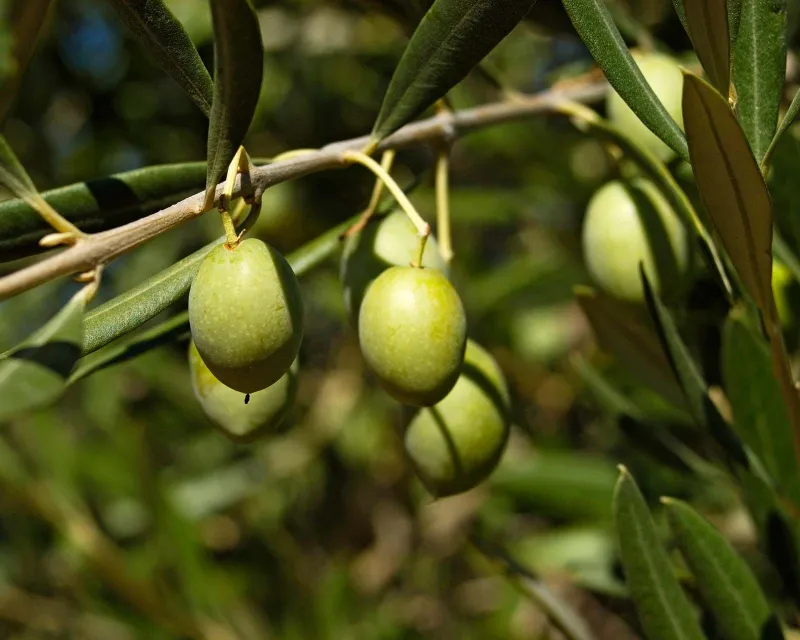
Photo: olive grove hillside terroir Mediterranean landscape aerial view, via cdn.britannica.com
Wine drinkers in the United States have long embraced the French concept of terroir—the idea that the physical environment of a vineyard leaves an indelible imprint on the wine produced within it. A Burgundian Pinot Noir tastes the way it does not merely because of grape variety or winemaking technique, but because of the precise composition of the limestone beneath the vines, the angle of the hillside, and the particular pattern of morning fog that settles over the Côte d'Or each autumn.
The same principle governs the production of exceptional extra virgin olive oil, though it receives considerably less public attention. Two oils pressed from the same olive variety—harvested in the same week, processed with identical equipment—can taste dramatically, even startlingly, different if they originate from neighboring groves situated on contrasting soils or at differing elevations. This is not marketing language. It is agricultural reality, and understanding it changes the way one approaches every bottle.
What Terroir Actually Means for Olive Oil
The word terroir resists tidy translation. It encompasses soil type and mineral content, altitude and slope orientation, temperature ranges and rainfall patterns, proximity to bodies of water, and even the microbial populations living in the earth beneath the trees. All of these variables influence how an olive tree grows, when it flowers, how it manages water stress, and ultimately what concentrations of polyphenols, aromatic compounds, and fatty acids accumulate in the fruit at harvest.
For the American consumer navigating an increasingly sophisticated marketplace of imported and domestically produced oils, terroir provides a conceptual map. It explains why a Sicilian Nocellara del Belice tastes of green tomato and fresh almonds while a Cretan Koroneiki from similar latitude delivers a more austere, intensely peppery profile. Geography is not the only variable, but it is among the most powerful.
Soil Composition: The Foundation of Flavor
Soil type influences olive oil character in ways that are both chemical and physiological. Calcareous soils—those rich in calcium carbonate, common across much of Tuscany, southern Spain, and parts of Greece—tend to produce oils with pronounced bitterness and elevated polyphenol concentrations. The tree's root system, forced to work harder in these mineral-dense, often well-drained soils, responds by concentrating protective antioxidants in the fruit.
Volcanic soils, found across Sicily, parts of Crete, and in California's emerging olive-producing regions, impart a different character entirely. The mineral complexity of basalt-derived earth often translates into oils with a more aromatic, almost floral quality alongside their characteristic pungency. Producers working volcanic terroir in Sicily frequently describe their oils as having a unique "smoky minerality" on the finish—a descriptor that strikes many first-time tasters as surprising but becomes immediately recognizable once identified.
Clay-heavy soils, by contrast, retain moisture more effectively, which can moderate the stress response in olive trees and produce oils with a softer, fruitier profile. This is one reason why certain Ligurian oils—grown on terraced clay and schist soils above the Italian Riviera—carry that characteristic delicacy and mild sweetness that makes them so suited to fish and fresh pasta.
Altitude and Its Influence on Harvest Timing
Elevation is one of the most underappreciated variables in olive oil production. As altitude increases, temperatures drop and diurnal variation—the difference between daytime highs and nighttime lows—widens. This thermal stress slows the ripening process, allowing the olive fruit to develop more complex aromatic compounds over a longer period.
Groves situated above 1,500 feet, such as those found in parts of Umbria, the highlands of Crete, or the foothills of Spain's Sierra Nevada, consistently produce oils with greater aromatic intensity and higher polyphenol content than their sea-level counterparts. The extended growing season at elevation also means that harvest timing decisions carry greater consequence: a producer working high-altitude groves must judge the precise moment when phenolic complexity is maximized without sacrificing yield.
In California, this dynamic is playing out in real time as producers in the Sierra Nevada foothills and the elevated reaches of Paso Robles experiment with altitude as a tool for flavor differentiation. Early results suggest that California's high-elevation oils can rival the complexity of their Mediterranean counterparts—a development worth watching closely.
Microclimate: The Invisible Hand
If terroir is the broad canvas, microclimate is the fine brushwork. Two groves on the same hillside, separated by a few hundred meters and a stand of cypress trees, can experience meaningfully different growing conditions. Wind exposure accelerates water loss and stresses the tree; a windbreak changes everything. Morning fog from a nearby valley provides moisture that a grove on the opposite slope never receives. A south-facing aspect captures more solar radiation than a north-facing one, advancing ripeness by days or even weeks.
These micro-scale differences accumulate over a growing season into flavor distinctions that experienced tasters can identify. In the Peloponnese region of Greece, producers on the western coastal slopes describe their Koroneiki oils as having a rounder, more maritime character compared to the more austere, herbal quality of inland grove oils pressed from the same variety. The Ionian Sea's moderating influence is not incidental—it is written into the oil.
Weather Patterns and the Variable of Vintage
Unlike many shelf-stable pantry items, olive oil carries the imprint of the specific year in which it was produced. A drought year concentrates phenolic compounds and typically yields smaller quantities of more intensely flavored oil. A wet spring followed by a warm, dry summer may produce abundant fruit with a softer, more approachable profile. Late frost can damage flowers and reduce yields dramatically, affecting which groves produce at all.
This vintage variability is one of the most compelling arguments for paying attention to harvest dates on premium bottles. An oil from a Tuscan producer in a drought year will taste different from the same producer's oil in a year of generous rainfall—not better or worse necessarily, but different in ways worth noticing. The American consumer who begins tracking these differences across purchases develops a tasting literacy that makes every subsequent bottle more meaningful.
Applying Terroir Knowledge to Purchasing Decisions
Armed with an understanding of geographic influence, the process of selecting olive oil becomes a more deliberate act. When a label indicates that an oil originates from high-altitude Umbrian groves, that detail carries real predictive value about flavor intensity. When a producer notes volcanic soil origins in their tasting notes, the expectation of mineral complexity is reasonable.
This does not require encyclopedic knowledge of every olive-producing region. It requires curiosity and a willingness to read labels as carefully as one reads a wine's back label. Ask where the groves are situated. Ask about the soil. Ask whether the harvest date reflects an early or late pick. These questions, increasingly answerable by quality-focused producers and retailers, lead directly to more satisfying purchases.
At Glassolive, we hold that the finest oils are distinguished not merely by process but by place. Every bottle in our curated selection carries the unmistakable signature of its origin—an invitation to read the land, one pour at a time.