The Pantry Shift: Why Premium Olive Oil Has Earned Its Place as America's Most Important Kitchen Investment

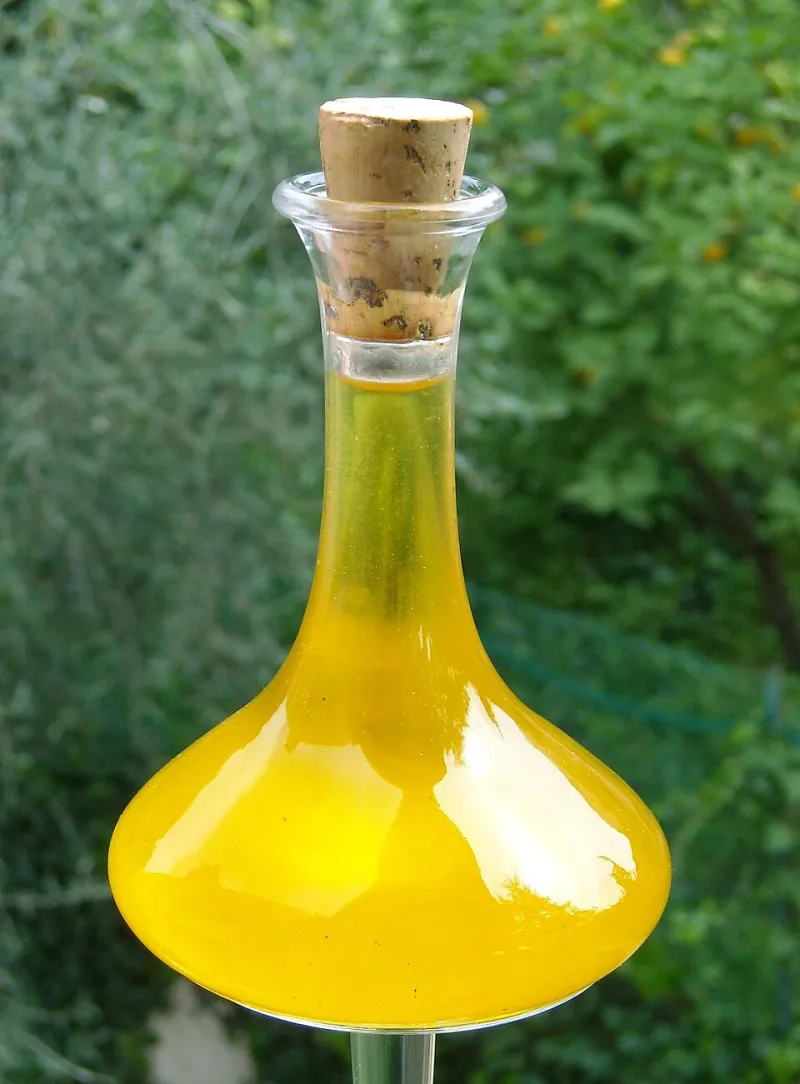
Photo: Wikiwiki, CC BY-SA 4.0, via Wikimedia Commons
For decades, the American relationship with olive oil was defined by a particular kind of pragmatism. Olive oil was a cooking fat—a healthier substitute for butter, a Mediterranean-sounding upgrade from vegetable oil—and the primary criterion for selecting it was price. The bigger the bottle, the lower the cost per ounce, the better the value. That logic was not unreasonable. It was simply incomplete.
Something has been changing. Walk into any well-stocked kitchen today, and you are increasingly likely to find a premium bottle—something with a harvest date, a named cultivar, perhaps a regional certification—sitting beside the stove not as a special-occasion accessory but as a daily working tool. The American home cook is, in meaningful numbers, beginning to treat olive oil the way a serious baker treats flour or a dedicated griller treats salt: as a foundational ingredient whose quality has direct, measurable consequences for the finished dish.
This shift did not happen in a vacuum, and it is worth understanding why it is happening now—and what it genuinely means for how we cook.
The Long Education of the American Palate
The United States has never lacked culinary enthusiasm. What it has historically lacked is a culture of ingredient-level discernment. For much of the twentieth century, the American food system rewarded convenience and uniformity above all else. Flavor was something added—through seasoning, sauce, technique—rather than something inherent in the raw material.
The past two decades have disrupted that assumption thoroughly. The farmers' market movement taught a generation that a tomato grown with care tastes categorically different from one grown for shelf stability. The craft beverage industry demonstrated that Americans would pay premium prices for quality they could taste and a story they could connect with. The rise of food media—from cable cooking channels to streaming documentaries to the vast, opinionated world of culinary social media—created an informed consumer class that asks questions about provenance, processing, and producer ethics.
Olive oil, for all its ancient prestige, arrived late to this conversation in America. But it is arriving now, and the reception is warmer than the industry has seen in a generation.
The Myth of the Cheap Pantry
There is a persistent and understandable instinct among home cooks to economize on pantry staples. The logic runs something like this: the expensive stuff is for restaurants; for everyday cooking at home, a serviceable generic will do. This reasoning has a certain surface appeal, but it collapses quickly under examination.
Consider how olive oil is actually used. A finishing drizzle over a bowl of pasta, a generous pour over roasted vegetables, a slow emulsification into a vinaigrette—these are applications where the oil is not a background player. It is, in many cases, the dominant flavor. When that flavor is flat, rancid, or aggressively vegetal in an unpleasant way (common characteristics of low-grade or old oil sold under the "extra virgin" label), the dish absorbs that mediocrity.
High-quality extra virgin olive oil, by contrast, contributes actively to a dish. Its peppery finish, its grassy brightness, its capacity to carry and amplify other flavors—these are not incidental qualities. They are the difference between food that is merely adequate and food that is genuinely satisfying.
Furthermore, premium olive oil is not as extravagant a purchase as it might initially appear. A quality 500ml bottle, used judiciously as a finishing oil, can last a household of two several weeks. Amortized across the meals it enhances, the per-serving cost is modest. The real extravagance, one might argue, is purchasing a cheaper oil that contributes nothing.
Health as a Clarifying Lens
The wellness movement has done considerable work on behalf of premium olive oil, even when it has not done so by name. As American consumers have grown more attentive to the relationship between diet and long-term health, the Mediterranean diet—with extra virgin olive oil as its cornerstone fat—has attracted sustained scientific and popular attention.
The distinction between grades of olive oil matters here in ways that go beyond flavor. True extra virgin olive oil, pressed from fresh olives without heat or chemical processing, retains a suite of polyphenols and antioxidants that lower-grade oils lose during refinement. Oleocanthal, the compound responsible for the characteristic throat-peppering sensation in high-quality oil, has been studied for its anti-inflammatory properties. These compounds are measurably present in well-produced, fresh extra virgin oil and measurably absent—or present in far lower concentrations—in refined or adulterated oils.
For consumers who are already spending money on supplements, organic produce, and functional foods, the case for spending more on genuine extra virgin olive oil is, if anything, more coherent than many of those other investments.
What "Value" Looks Like When You Reframe the Question
The budget-cooking framework asks: what is the lowest price at which I can acquire this ingredient? The investment-cooking framework asks a different question: what is the highest return I can generate from this purchase in terms of flavor, nutrition, and culinary versatility?
Premium olive oil scores extraordinarily well under the second framework. It requires no special technique to deploy effectively. It does not demand equipment, advance preparation, or culinary training. A drizzle of a genuinely excellent oil over a fried egg, a ripe tomato, a simple grilled fish, or a bowl of good bread immediately elevates those dishes in ways that are perceptible even to an untrained palate. It is, in this sense, the most democratically accessible luxury in the kitchen.
There is also a compounding effect to consider. Cooks who begin paying attention to olive oil quality tend to develop broader ingredient awareness. The same sensibility that leads someone to seek out a well-made Sicilian oil often leads them, in time, to better vinegars, better salts, better cheeses. Premium olive oil functions, for many American home cooks, as a gateway to a more deliberate and ultimately more rewarding relationship with food.
The Glassolive Perspective
At Glassolive, we have long believed that the finest olive oils deserve the same thoughtful attention that Americans routinely extend to wine, coffee, and artisan cheese. The conversation around olive oil quality is no longer the exclusive domain of specialty food importers and culinary professionals. It belongs to anyone who cooks, eats, and cares about the difference.
The American table is changing. The pantry is being reconsidered not as a repository of cheap commodities but as a curated collection of ingredients that reflect the cook's values and aspirations. Premium olive oil is not the most glamorous item in that collection. It will not draw the eye the way a beautiful copper pan or an imported ceramic does. But of all the investments a serious home cook can make, few pay dividends as consistently, as deliciously, and as immediately as the bottle of genuinely excellent oil sitting beside the stove.
That bottle is not a luxury. It is a decision about the kind of meals you intend to make.