What's Really in That Bottle: Navigating Fraud, Certification Gaps, and the Search for Honest Olive Oil
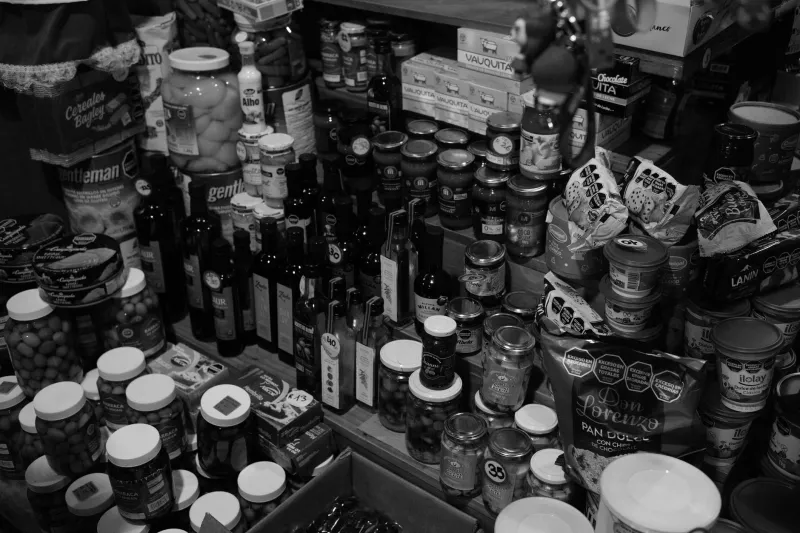
There is a quiet crisis unfolding on the shelves of American grocery stores, specialty markets, and even reputable online retailers. The product in question is one of the most celebrated ingredients in the culinary world — extra virgin olive oil — and the problem is that a significant portion of what is sold under that designation is not what it claims to be. Estimates from food fraud researchers, including a widely cited study from the University of California, Davis, suggest that a substantial share of imported extra virgin olive oil sold in the United States fails to meet the legal and sensory standards the label implies. For the food enthusiast who has invested both money and trust in a premium product, this is not a minor inconvenience. It is a fundamental betrayal.
Understanding how this fraud operates — and more importantly, how to protect yourself from it — requires moving beyond surface-level skepticism and into a working knowledge of the industry's vulnerabilities.
The Anatomy of Olive Oil Deception
Fraud in the olive oil trade takes several distinct forms, and they are not always easy to distinguish from one another. The most common involves blending: a producer takes a quantity of genuine extra virgin olive oil and extends it with lower-grade refined olive oil, or in more egregious cases, with entirely different plant oils such as sunflower or canola. The resulting product may look, and to an untrained palate even taste, passably similar to the real thing — particularly if flavor-masking agents or trace amounts of chlorophyll are added to approximate the color of fresh oil.
A second category of deception involves geographic misrepresentation. Oils pressed from olives grown in North Africa or other lower-cost regions are bottled in Italy and sold under labels that strongly imply Italian origin. This practice exploits the prestige associated with Italian producers without offering any of the terroir, harvest standards, or traceability that justify that prestige. The label may technically comply with the letter of import law while thoroughly misleading the consumer about what they are purchasing.
A third, subtler form of fraud involves harvest date manipulation. Olive oil degrades with age, and the distinction between a fresh-pressed oil and one that has sat in storage for eighteen months is significant in both flavor and health properties. Relabeling older stock with a more recent harvest date — or simply omitting the harvest date entirely — allows producers to move inventory that would otherwise be unsaleable to an informed buyer.
Where Certification Falls Short
Many consumers reasonably assume that certification seals offer a reliable safeguard. Labels bearing designations such as PDO (Protected Designation of Origin), PGI (Protected Geographical Indication), or the North American Olive Oil Association's quality seal suggest independent oversight. And to a degree, they do provide a layer of accountability. However, it is worth understanding the limitations of these systems.
Certification bodies vary considerably in the rigor of their testing protocols and the frequency of their audits. Some rely heavily on producer self-reporting. Others conduct chemical analysis but do not systematically test for every known adulterant. The supply chain between grove and American retailer can involve multiple intermediaries — brokers, bottlers, importers, and distributors — each representing a potential point at which the product's integrity can be compromised. A certification obtained at the point of production does not guarantee that the contents of the bottle on an American store shelf have remained unaltered through that journey.
This is not an argument against seeking certified products. It is an argument for understanding that certification is one data point among several, not a final verdict.
Red Flags That Even Careful Shoppers Miss
Price is the most reliable early indicator of authenticity — not because expensive oils are automatically genuine, but because genuinely high-quality extra virgin olive oil cannot be produced cheaply. When a large-format bottle of imported extra virgin olive oil is priced comparably to a commodity cooking oil, the economics of legitimate production make it nearly impossible for that price to reflect the real thing. Harvest, milling, quality sorting, and transport costs for premium oil are substantial. A price point that seems too good to be true almost certainly is.
Beyond price, consider the following:
- Harvest date versus best-by date. A best-by date set two years from the time of purchase tells you very little about when the olives were pressed. A specific harvest date — ideally within the past twelve to eighteen months — tells you something meaningful.
- Producer specificity. Generic labels that reference a country or region without naming a specific estate, cooperative, or mill offer little traceability. Producers with nothing to hide tend to say exactly where their oil comes from.
- Tin or dark glass packaging. Light accelerates oxidation. Reputable producers who care about the oil reaching the consumer in good condition package accordingly. Clear glass bottles are a warning sign for any oil intended for more than immediate use.
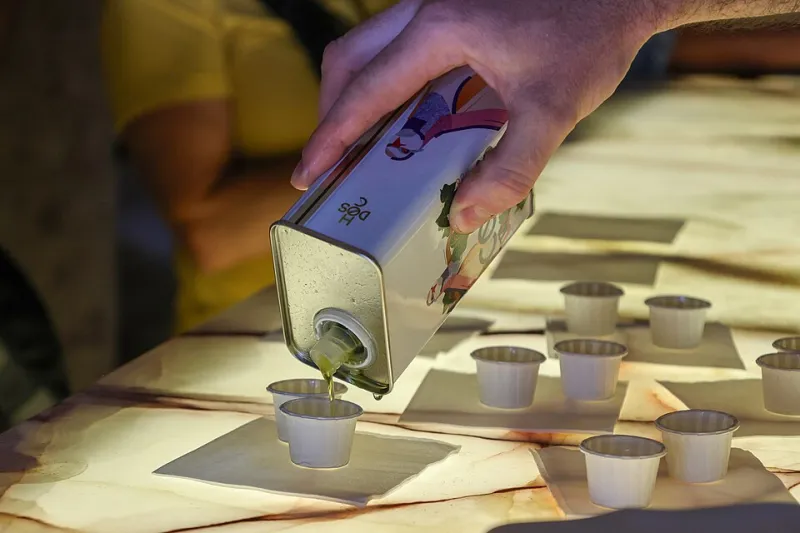
- Sensory coherence. Fresh, high-quality extra virgin olive oil should exhibit some degree of bitterness and peppery finish — characteristics derived from polyphenols present in properly harvested and processed fruit. An oil that is uniformly bland, greasy, or waxy on the palate is likely not what the label claims.
The Case for Radical Transparency
The most effective response to a marketplace characterized by opacity is to support producers who operate with radical transparency. This means producers who publish their harvest dates and mill dates, who identify the specific olive varieties in their oil, who invite third-party testing and make those results available, and who can trace every bottle back to the grove where the fruit was grown.
This standard of transparency is not common, but it exists. Small-batch producers in California, family estates in Tuscany, and cooperative mills in Greece and Spain have demonstrated that it is possible to bring a fully traceable product to the American market. These producers tend to operate at a scale that makes accountability feasible and a price point that reflects the real cost of doing things properly.
At Glassolive, the commitment to sourcing oils with documented provenance reflects a conviction that the relationship between producer and consumer ought to be built on verifiable fact rather than evocative label design. When we describe a harvest date, a variety, or a region, we mean it in the most literal sense — because our audience deserves nothing less.
Protecting Your Investment Going Forward
Building a more reliable olive oil pantry does not require becoming a professional taster or a food scientist. It requires developing a few disciplined habits: reading labels with genuine attention, asking retailers about their sourcing relationships, prioritizing producers who publish harvest information, and trusting your palate when something seems off.
The premium olive oil market, for all its vulnerabilities, also contains some of the most conscientious and passionate producers in the food world. Finding them — and supporting them consistently — is the most effective form of consumer protection available. It also happens to produce a significantly more rewarding experience at the table.
The glass, after all, should contain exactly what it promises.