Invested in the Bottle, Lost in the Kitchen: Closing the Gap Between Premium Olive Oil and How Americans Actually Use It
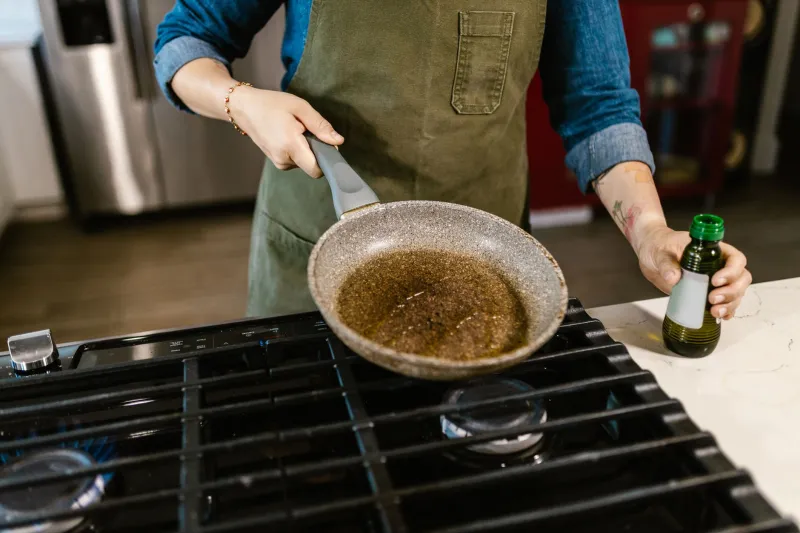
There is a particular kind of culinary irony unfolding in kitchens across America. A home cook drives to a specialty grocer, reads the harvest date on three different bottles, selects an early-harvest Sicilian extra virgin with pronounced grassy notes and a peppery finish, pays thirty-two dollars for it, and then brings it home to sauté onions for a weeknight pasta. The aromatics hit the pan. The heat climbs. And somewhere in that moment, the complexity that justified every cent of that price quietly evaporates.
This is not a fringe scenario. It is, by most accounts, the dominant pattern in how premium olive oil moves through the American home kitchen. The investment in quality has never been higher. The understanding of how to deploy that quality has not kept pace.
The Anatomy of the Mismatch
Premium extra virgin olive oil is, at its core, a fresh fruit juice. Its character — the grassy volatiles, the fruity esters, the polyphenols that create that distinctive peppery throat sensation — exists in a state of elegant fragility. These compounds are not indestructible flavor molecules waiting patiently to express themselves under any condition. They are heat-sensitive, oxygen-reactive, and light-vulnerable. When exposed to sustained high temperatures, the very compounds that distinguish a forty-dollar bottle from a twelve-dollar one are the first casualties.
The practical implication is straightforward: using a complex, expensive finishing oil as a default cooking fat for high-heat applications does not simply waste money. It actively produces a result that a far less expensive refined oil would achieve just as well, if not better. The premium pays no dividend in those circumstances.
Yet the mistake persists, and it persists for understandable reasons. Olive oil has been culturally positioned as a monolithic ingredient — one bottle, universal application. The nuance that separates a robust Tuscan oil suited for drizzling over bistecca from a delicate Arbequina well-matched to raw preparations is not communicated on most labels, and it is rarely discussed in mainstream American cooking media.
Three Patterns That Quietly Squander Quality
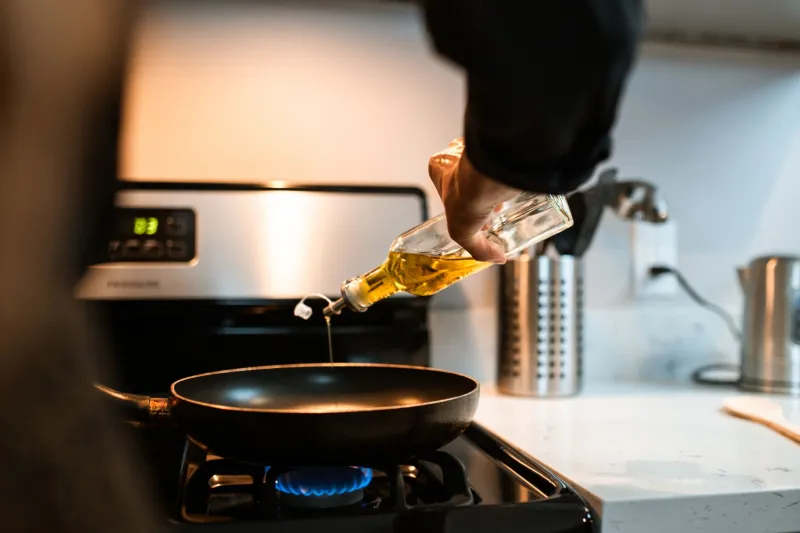
The Default-Fat Habit. Many home cooks reach for their best bottle every time a recipe calls for olive oil, regardless of what that recipe demands. Roasting vegetables at 425°F, searing proteins, building a soffritto over medium-high heat — these are tasks where a good-quality pure olive oil or a more affordable extra virgin performs adequately, and where the subtle character of a premium bottle is rendered irrelevant by temperature alone. Reserve the exceptional oil for what follows the heat, not what enters it.
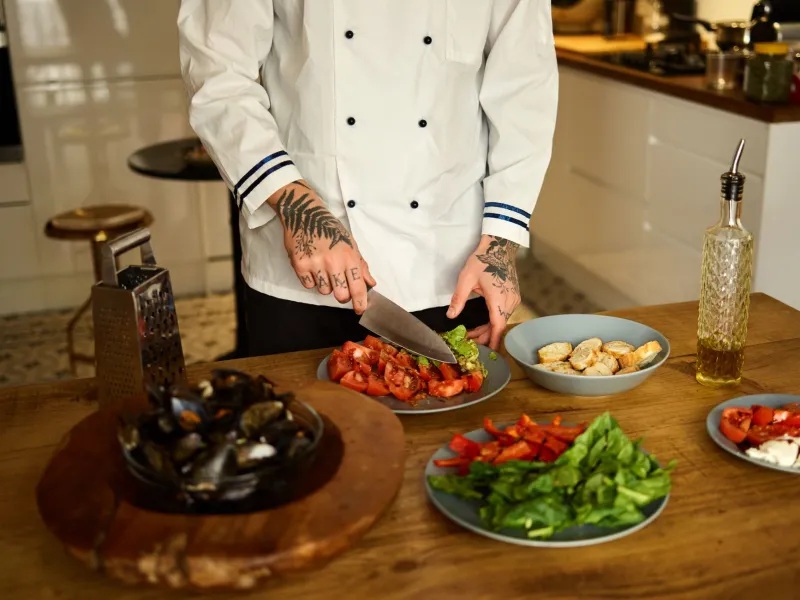
The Invisible Pour. A finishing oil applied without intention is rarely a finishing oil at all. When a few tablespoons are drizzled reflexively over a completed dish without consideration for quantity, placement, or contrast, the oil becomes background noise rather than a defining element. A well-considered pour — a deliberate ribbon across a composed salad, a precise pool alongside grilled fish, a measured finish on a bowl of white beans — transforms the oil into a flavor event. The difference lies entirely in attention, not in additional cost.
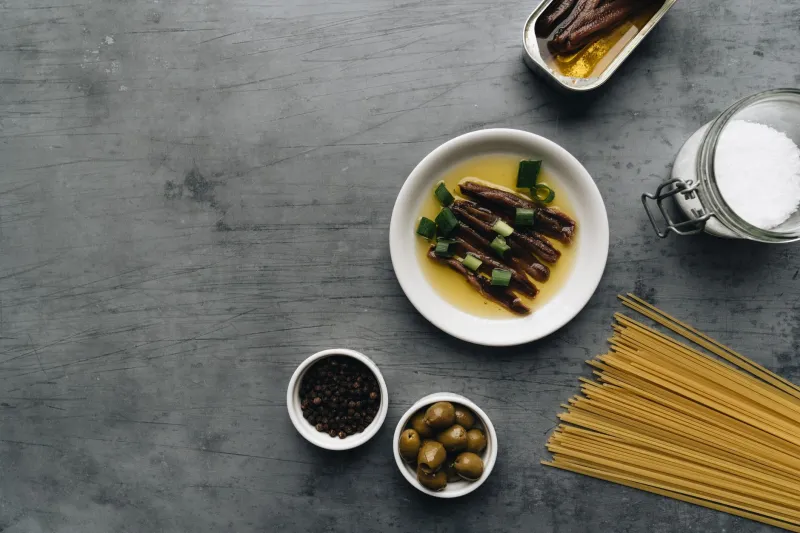
The Pairing Blind Spot. Olive oils differ from one another as meaningfully as wines differ from one another, yet most American home cooks apply a single bottle to every dish without regard for compatibility. A high-polyphenol, intensely bitter oil from Crete can be electrifying over charred broccoli or a robust ribollita. Applied to a delicate crudo or a mild burrata, that same oil overwhelms. Conversely, a buttery, mild California Arbequina that sings alongside stone fruit and fresh cheeses may disappear entirely against a plate of braised lamb with rosemary. Learning even a basic vocabulary of intensity — light, medium, robust — and matching it to dish weight is the foundational skill most premium-oil buyers are missing.
A Practical Framework for the American Pantry
The most effective correction to these habits does not require buying more oil. It requires buying with intention and organizing usage accordingly.
Maintain two bottles simultaneously. The first is a workhorse: a reliable, affordable extra virgin or pure olive oil designated explicitly for cooking applications involving heat. The second is your premium bottle, reserved for cold applications, finishing, and direct tasting. This single organizational shift eliminates the majority of high-heat waste.
Categorize dishes before you pour. Before reaching for the premium bottle, ask a simple question: will this oil survive the process, or will it define the result? If the answer is the former, the workhorse earns its place. If the answer is the latter — if the oil is the last thing to touch the plate, if it will be tasted in its unaltered state, if the dish is built around its character — then the premium bottle belongs in your hand.
Match intensity to dish weight with consistency. Light-bodied oils (many Ligurian, Provençal, and Central California Arbequinas) align with seafood, fresh vegetables, mild cheeses, and egg preparations. Medium-intensity oils (a range of Spanish Picuals, Greek Koroneikis, and many blended Italian varieties) work beautifully across a broad spectrum: legume dishes, grain salads, roasted root vegetables, grilled poultry. Robust, high-polyphenol oils from Tuscany, Crete, or Andalusia are the right choice for bitter greens, red meats, aged cheeses, and dishes with pronounced umami depth. These are not rigid rules. They are orientation points that make the decision easier the more consistently they are applied.
Taste the oil before you use it. This practice, common in professional kitchens and olive oil competitions, remains rare in American homes. Tasting a few milliliters of oil before incorporating it into a dish recalibrates your understanding of its character on that day, with that dish in mind. It transforms the oil from a passive ingredient into an active culinary decision.
The Return on Attention
The premium olive oil market in the United States has matured considerably. Harvest-dated bottles from California, Greece, Italy, Spain, and beyond are now accessible through specialty retailers, farmers markets, and direct-to-consumer producers with an ease that would have been remarkable a decade ago. American consumers are, by every measure, more curious and more willing to invest than ever before.
What has not fully followed that investment is the practical knowledge of how to honor it. The gap is not one of enthusiasm or even of budget. It is a gap of application — a missing framework for translating quality on the label into quality on the plate.
Closing that gap does not require culinary training or an encyclopedic knowledge of olive cultivars. It requires two bottles instead of one, a moment of consideration before each pour, and a willingness to treat the finest oil in the pantry as the finishing ingredient it was always meant to be.
The bottle has been doing its part. The kitchen simply needs to catch up.