What You Are Actually Paying For: Decoding the True Cost of Premium Olive Oil
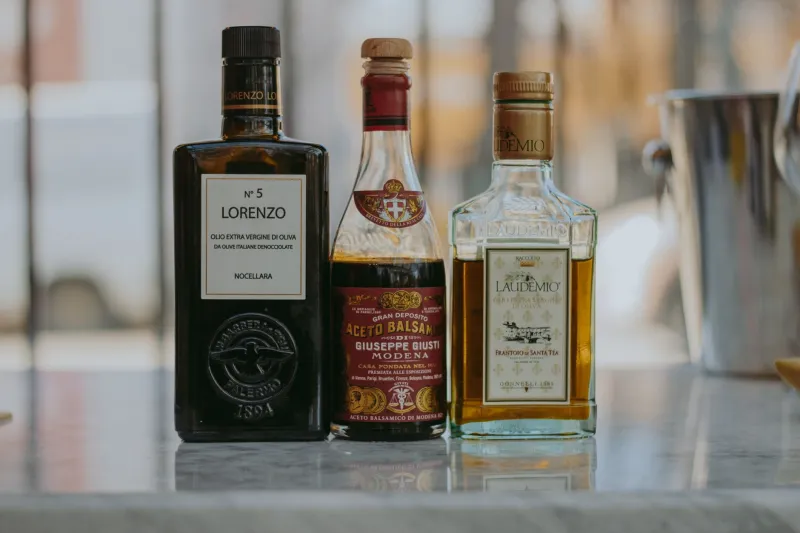
A forty-dollar bottle of olive oil and a twelve-dollar bottle occupy the same grocery aisle shelf, wear similarly elegant labels, and both claim some variation of "extra virgin" on their front panels. For the American consumer navigating an increasingly crowded specialty foods market, the question is not simply which bottle is better—it is whether the price difference corresponds to anything real. The answer, as with most things in the world of fine food, is nuanced. Some premiums are fully earned. Others are constructed almost entirely from packaging decisions and marketing ambition.
Understanding the economics behind olive oil pricing does not require an agricultural degree. It requires only a willingness to look honestly at what goes into producing a bottle of genuine quality—and to recognize the signals that separate substance from theater.
The Grove Itself: Where Cost Begins Before the First Drop Is Pressed
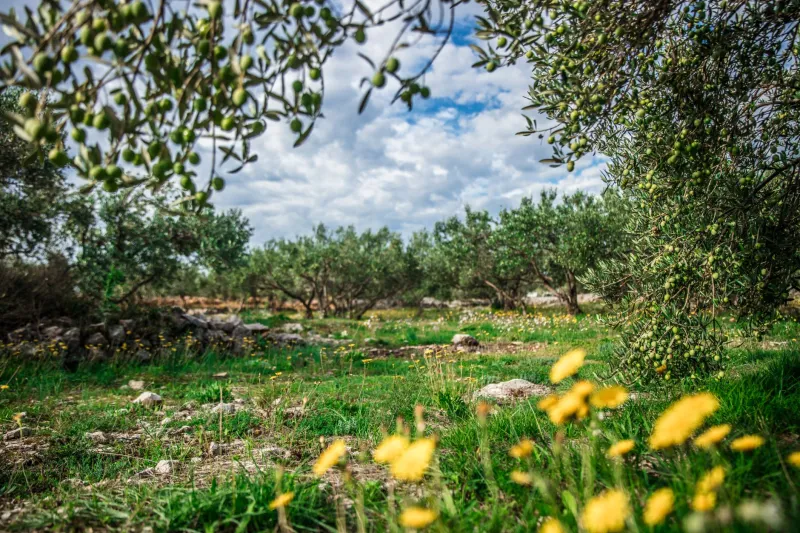
Olive oil production is, at its foundation, an agricultural endeavor, and agriculture is expensive. Land acquisition or lease costs in premium growing regions—Tuscany, Andalusia, the Peloponnese, or California's Central Valley—represent a significant baseline investment before a single tree is planted. Mature olive trees, which yield fruit of greater complexity and concentration, can take decades to reach their full productive potential. Producers who maintain heritage groves of ancient varietals are stewarding an asset that cannot be replicated quickly or cheaply.
Harvest methodology compounds these costs substantially. Hand-harvesting, which preserves fruit integrity and minimizes oxidation damage, requires skilled labor at a scale that mechanized operations cannot match for price. In regions where labor costs are already high—including California and parts of Italy—this single factor can represent the largest variable expense in the entire production chain. Producers who harvest early in the season, when polyphenol content is at its peak, sacrifice yield volume for quality, further concentrating cost per liter.
For a small-batch producer pressing perhaps five hundred cases in a strong year, those fixed costs are distributed across far fewer bottles than a large commercial operation pressing millions of liters. The math alone justifies a meaningful price differential.
Milling, Chemistry, and the Cost of Doing It Right
Once harvested, olives must be processed quickly—ideally within hours—to prevent fermentation and preserve the volatile aromatic compounds that define a superior oil. Cold extraction, which keeps temperatures below a defined threshold throughout pressing, requires specialized equipment and careful process management. Producers who invest in modern continuous-cycle mills capable of maintaining precise temperature control are spending considerably more than those who rely on older, less controlled methods.
Independent laboratory testing adds another layer of legitimate cost. A producer committed to transparency will pay for polyphenol analysis, free acidity measurement, peroxide value testing, and in some cases nuclear magnetic resonance profiling to verify authenticity and confirm chemical quality. These tests are not cheap, and they are not universally required—which means their presence on a producer's documentation is itself a signal of seriousness. When you see a bottle accompanied by a published harvest date, a lot number, and a laboratory certificate, you are likely paying in part for that accountability infrastructure.
Bottling, Packaging, and the Theater of Presentation
This is where the economics of olive oil begin to diverge most sharply between genuine value and pure positioning. Dark glass bottles—whether deep green or opaque black—offer meaningful protection against light degradation and represent a legitimate quality investment. Tins offer even greater protection and are sometimes preferred by producers who prioritize function over visual appeal. Both formats add cost relative to clear plastic or thin glass, and that cost is justified.
Beyond basic protection, however, packaging decisions quickly become aesthetic choices rather than quality choices. Embossed labels, wax-sealed capsules, custom bottle shapes, weighted glass bases, and elaborate outer cartons can collectively add several dollars to the retail price of a bottle without contributing a single additional milligram of polyphenol or a single additional day of freshness. There is nothing inherently wrong with beautiful packaging—it signals care and intention, and it makes a compelling gift. But the informed buyer recognizes that a stunning bottle does not automatically contain a superior oil.
The same principle applies to origin branding. A label that prominently features a Tuscan hillside illustration, a Venetian crest, or a California estate name is communicating aspiration. Whether that aspiration corresponds to the contents requires investigation beyond the front panel.
Retailer Margins, Import Costs, and the American Market Premium
For oils produced outside the United States, importation introduces additional cost layers that are entirely legitimate but sometimes overlooked by consumers. Freight, customs duties, importer margins, distributor markups, and finally retailer margins can collectively represent forty to sixty percent of the final shelf price. A thirty-five-dollar bottle of Sicilian DOP oil at a specialty grocery store in New York may have left the producer's facility at a price that seems modest by comparison—but by the time it reaches you, every intermediary in that chain has taken a portion.
This does not mean imported oils are overpriced relative to their quality. It means that a domestically produced California oil at a similar retail price may represent a different—and sometimes more direct—relationship between production cost and what you pay. Buying directly from American producers through their websites or at farmers' markets eliminates several of those margin layers entirely, often delivering genuinely superior value at the same price point.
Where the Premium Is Earned—and Where It Is Not
So how does one calibrate judgment? A few reliable indicators suggest that a price premium reflects genuine production investment:
Harvest date transparency. A bottle that specifies the month and year of harvest, rather than a vague "best by" date, reflects a producer confident in the freshness of their product and committed to accountability.
Certified origin specificity. Designations such as DOP, PDO, or California Olive Oil Council certification indicate third-party verification of origin and production standards. These are not infallible, but they represent a meaningful baseline.
Published chemical analysis. Free acidity below 0.3 percent, low peroxide values, and documented polyphenol content above 200 mg/kg suggest a producer who has tested their oil and is willing to share the results.
Single-variety or single-estate sourcing. Blended oils are not inherently inferior, but single-varietal or single-estate production implies a level of traceability and intentionality that typically corresponds to higher production standards.
Conversely, several signals suggest that a price premium may be more about marketing than merit: celebrity endorsements without substantive quality documentation, vague geographic references that imply Italian or Greek origin without certification, elaborate packaging that exceeds the investment visible in any quality documentation, and retail placement in lifestyle gift shops rather than serious culinary retailers.
Spending Well Across Every Price Tier
The goal of this analysis is not to suggest that expensive olive oil is never worth its price—it often is, emphatically so. A genuinely exceptional estate oil, cold-pressed from early-harvest fruit, tested and certified, imported with care and stored properly, can transform a dish in ways that a commodity oil simply cannot. That experience has a legitimate price.
The goal, rather, is to ensure that when you reach for a premium bottle, you are purchasing the oil itself—not the story constructed around it. At Glassolive, we hold that the finest olive oil earns its price through what is in the bottle, not what is printed on the label. Spend generously on quality. Spend skeptically on presentation. The distinction, once learned, will serve you at every price point for the rest of your culinary life.